CareLync gives people living with fibromyalgia and other rhr a private daily log for pain, fatigue, brain fog, and flares — so you can stop relying on memory and start bringing real evidence to every appointment.
Every day with fibromyalgia is different. Pain levels shift hour to hour. Fatigue arrives without warning. Brain fog makes it difficult to recall what happened last week — let alone three weeks ago when your specialist asks.
Most health apps aren't designed for this. They track steps and heart rate — not flares, tender points, and the complex relationship between sleep, mood, stress, and pain that defines daily life with a chronic condition.
CareLync gives you one consistent daily log, built specifically for the complexity of fibromyalgia. The result is a clear, honest picture of how you've really been — ready for any appointment, on any day.
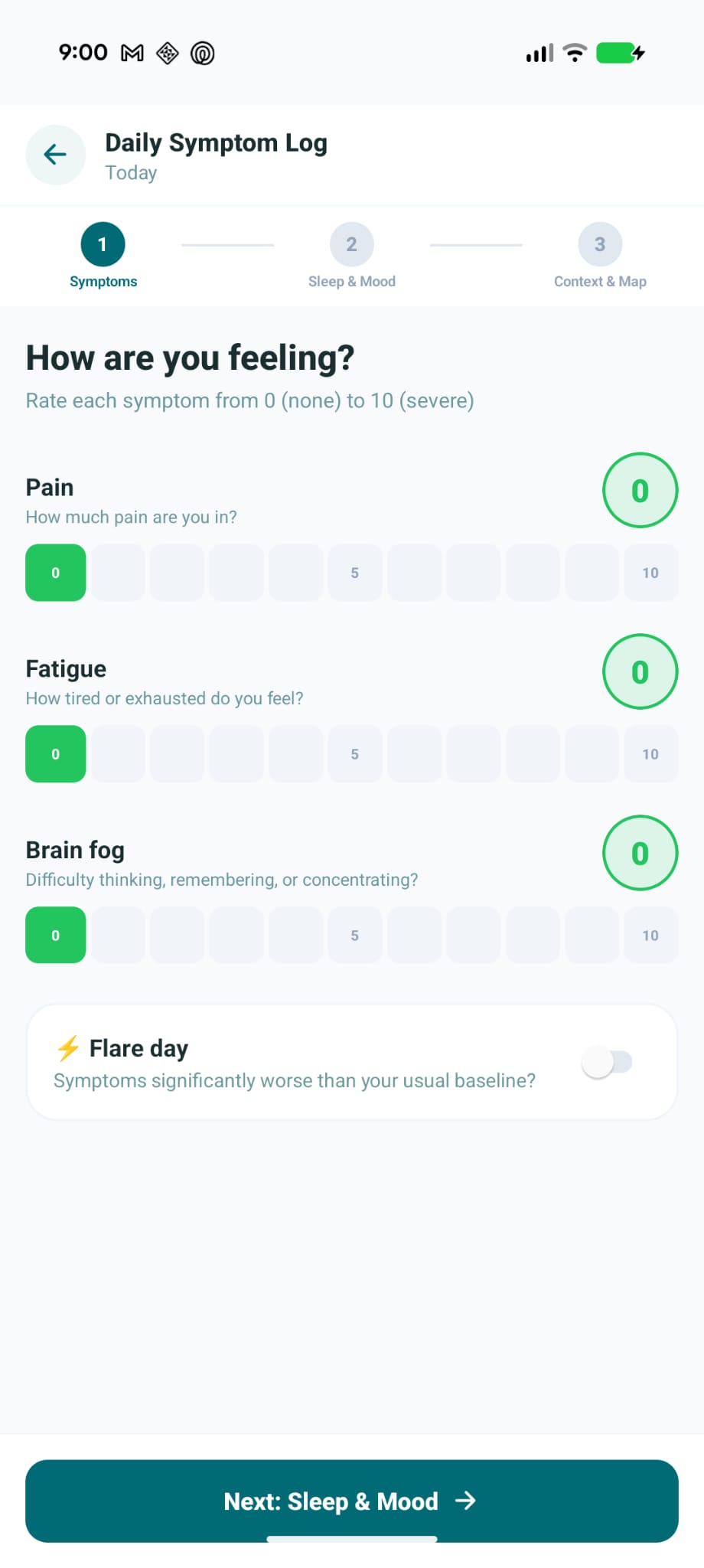
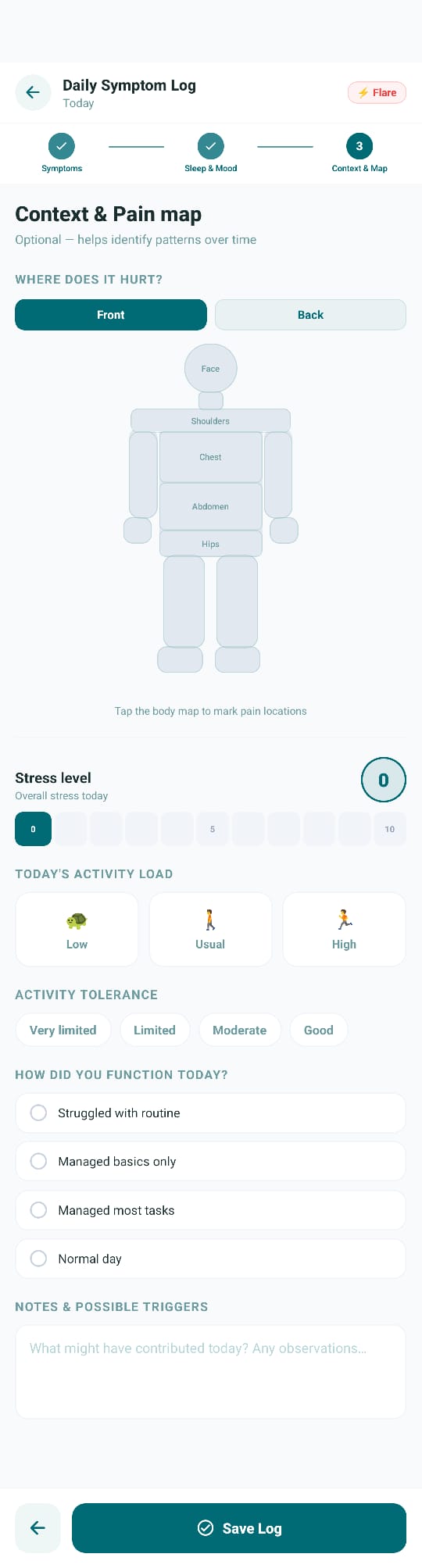
Log pain, fatigue, and brain fog daily. Mark flare days. Map pain locations on your body. Track sleep and mood. All of this builds a clinical picture that your specialist can actually use — instead of asking you to recall how you felt three months ago from memory.
Every feature was built around what actually matters when you live with fibromyalgia — not generic step counting or heart rate tracking.
Three core scores — pain, fatigue, brain fog — on a 0–10 scale. Simple enough to complete on your worst days, detailed enough to be clinically useful months later.
Core TrackingMark flare days with severity and trigger notes. Over time you'll see what precedes them — overexertion, poor sleep, stress — giving you something concrete to discuss with your care team.
Flare TrackingTap a body map to mark your pain locations. Over weeks, the data reveals which areas are most consistently affected — moving the conversation from vague to specific.
Pain MapLog sleep quality and hours nightly. Watch the connection between poor rest and next-day pain become visible across your chart history — a pattern your specialist needs to see.
SleepLog mood, stress, activity tolerance, and daily function alongside your symptoms. Fibromyalgia affects every dimension of life — your log should capture all of it.
WellbeingCharts across any date range — 1 week, 1 month, 3 months. Average scores calculated automatically. Flare days highlighted. Everything you need to evaluate a treatment period.
TrendsGenerate a plain-text clinical summary: average scores, flare count, worst days, sleep quality, trigger themes, and current medications — all in one shareable document.
Visit PrepBuilt-in guides on pacing, flare navigation, the sleep–pain connection, working with your care team, and more — written for people with fibromyalgia, not medical professionals.
EducationEverything stored locally on your device. No account needed, no cloud sync, no third parties. Your most personal health data stays exactly where it should.
PrivacyThe hardest part of managing fibromyalgia is communicating the invisible. CareLync makes the invisible visible — in a format your clinician can actually use.
Choose the period to summarise — last 30 days, since your last appointment, or a custom range.
Average pain, fatigue, and fog scores. Flare count and worst days. Sleep quality distribution. Recurring trigger themes from your notes.
Attach current medications, recent blood tests, and any other symptoms to the same summary — one complete document.
Tap Share to send a plain-text summary via email or message. No app required at the other end.
CareLync pre-loads questions tailored to a rheumatology or GP visit — so you never leave wondering if you forgot something important.
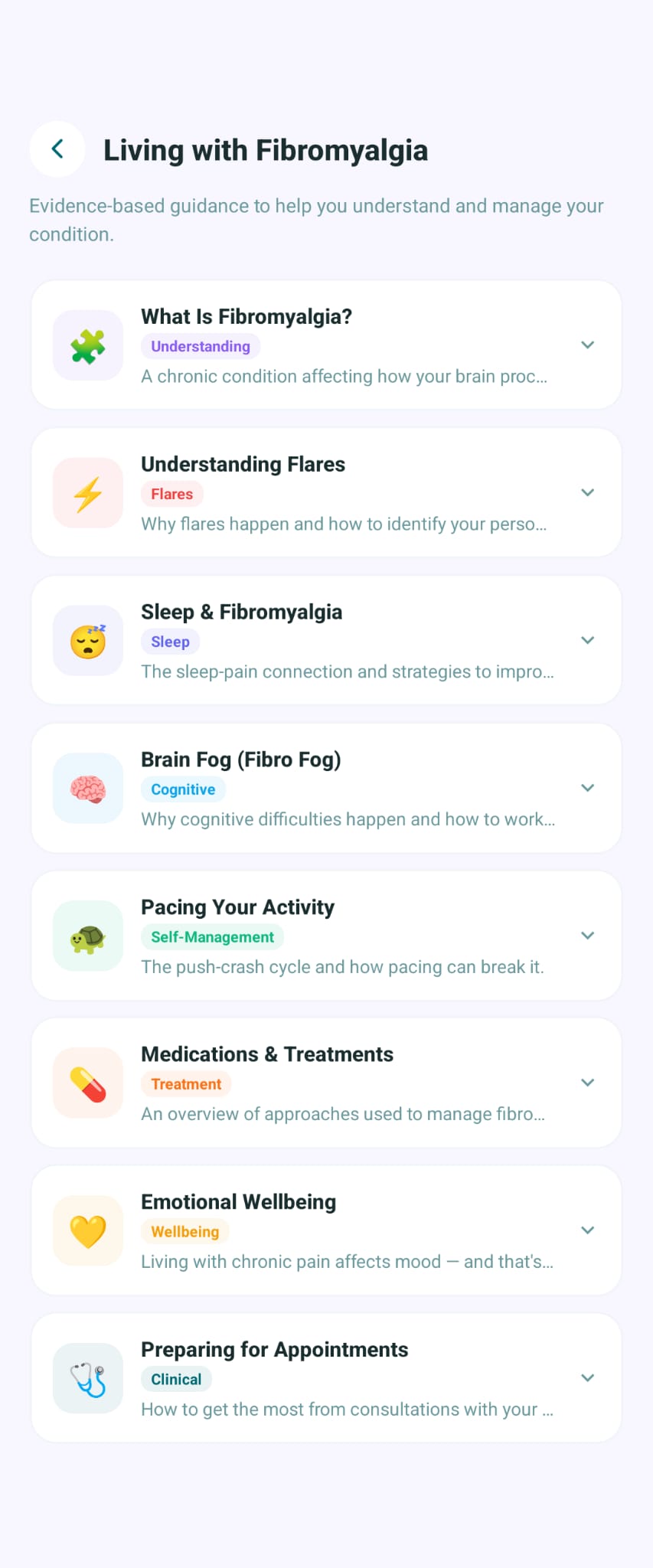
CareLync includes a learning library written for people living with fibromyalgia — covering the questions your specialists rarely have time to answer fully.
Central sensitisation, pain amplification, and why fibromyalgia is real — explained clearly.
How to stay within your capacity, avoid boom-bust cycles, and build tolerance gradually.
What happens during a flare, how to reduce severity, and practical steps you can take right now.
Why unrestorative sleep makes everything worse, and evidence-based sleep hygiene for chronic pain.
Why exercise helps (even when it hurts), how to start safely with aquatic therapy and gentle walking.
The grief, frustration, and isolation of chronic illness — and psychological strategies that help.
How to communicate effectively with GPs, rheumatologists, and allied health. What to bring to appointments.
What the evidence says about anti-inflammatory eating and maintaining energy through diet.
Free to download. No account required. Your data stays on your phone — private, secure, and available offline.
🔒 Your health data is deeply personal. CareLync stores everything on your device only. No cloud sync, no accounts, no advertising. Read our privacy policy →